
In partnership with the Body Dysmorphic Disorder Foundation, the International OCD Foundation is excited to announce an annual BDD Awareness Day, a new global effort to raise awareness of Body Dysmorphic Disorder, reduce stigma, and highlight that effective treatment and recovery are possible. Common areas of preoccupation include concerns of the skin, nose, hair, eyes, chin, lips and overall body build.
What is Body dysmorphic disorder?
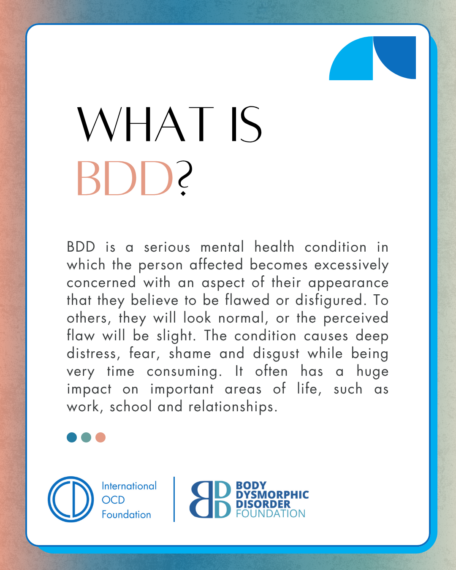
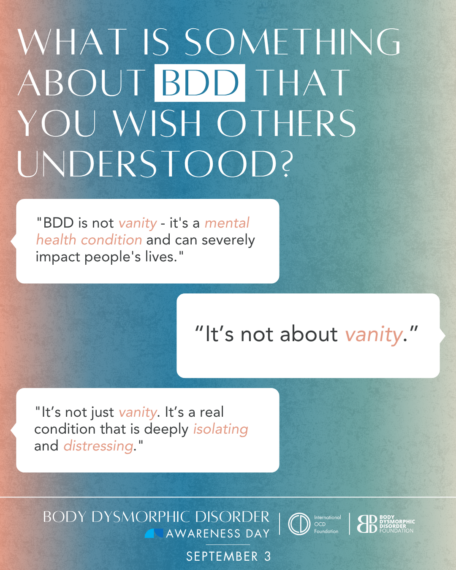
Body Dysmorphic Disorder (BDD) is a mental health condition in which a person becomes intensely preoccupied with (a) perceived flaw(s) in their appearance. The flaw is often minor or not noticeable to others, but the distress it causes is real and often interferes with daily life. This drives them to engage in behaviours in an attempt to hide or fix perceived flaws.
Who Does BDD Affect?
- People of all ages, genders, and backgrounds
- Often begins in adolescence
- Occurs in approximately 1 in 50 people
- Frequently co-occurs with anxiety or depression
Common Signs & Behaviors
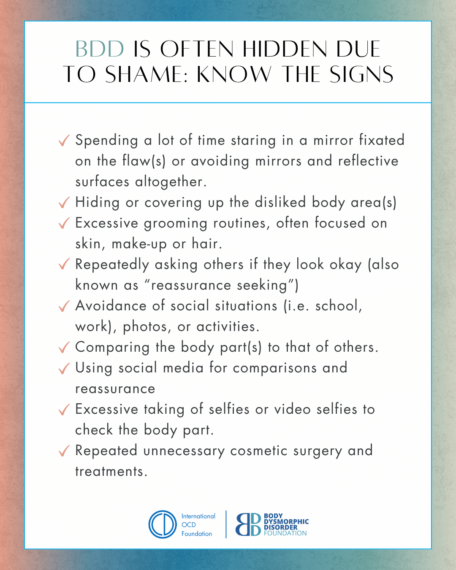
- Persistent, intrusive thoughts about appearance
- Frequent mirror checking or mirror avoidance
- Excessive grooming, skin picking, or camouflaging
- Reassurance seeking from others
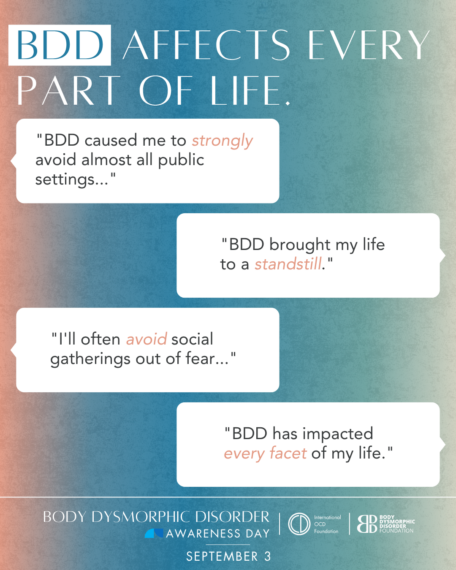
- Avoidance of social situations, such as school, work, photos, or activities
- Repeated unnecessary cosmetic surgery and treatments
How BDD is different from Normal Appearance Concerns
Everyone worries about their appearance at times. BDD is different because:
- Appearance concerns take up at least an hour per day, but often many more
- Thoughts cause significant distress
- Engage in behaviors aimed at hiding or fixing perceived flaws, taking up significant amounts of time
- Work, school, or relationships are affected
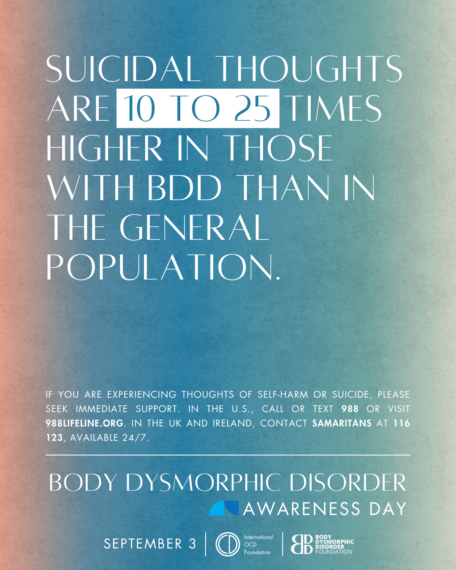
- BDD is associated with a high risk of suicide. A recent study found that over a person's lifetime, approximately 66% of individuals with BDD experience suicidal thoughts and about 35% attempt suicide. Read the study.
- Help is available. If you or someone you know is in crisis:
- 988 Suicide & Crisis Lifeline: Call or text 988, or visit 988lifeline.org.
- Crisis Text Line: Text HOME to 741741 (U.S. and Canada) or visit crisistextline.org for international options.
- International Support: Visit findahelpline.com to find free, confidential crisis support in your country.
- Help is available. If you or someone you know is in crisis:
BDD is treatable. Evidence-based approaches include:
-
- Cognitive Behavioral Therapy (CBT) tailored specifically for BDD including Exposure and Response Prevention (ERP)
- Medications, such as SSRIs
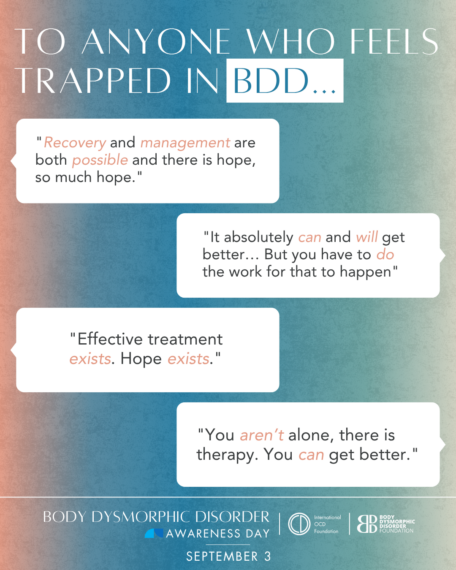
Early treatment improves outcomes and quality of life.
Myths and Misperceptions about BDD
Upcoming BDD Events
BDD Awareness Day Livestream
Thursday, September 3, 2026
9:00 AM PT / 12:00 PM ET / 4:00 PM GMT
Join Chris Trondsen, LMFT, along with Tilly Kaye and experts Katherine Phillips, MD, and Sony Khemlani, PhD, for a special discussion about Body Dysmorphic Disorder, including how BDD presents and the evidence-based treatment options available.
Coming soon
Building Courage and Community: BDD Conference 2026
Hosted by the BDD Foundation
October 10, 2026
Regent's University & Virtual
This year's conference highlights the power of lived experience, peer support, and community connection. Interactive workshops and support sessions will provide practical recovery tools while helping attendees build confidence, reduce isolation, and foster hope.
Online BDD Conference
Hosted by the International OCD Foundation
December 5, 2026
Virtual
Whether you're a mental health professional, someone living with BDD, or a loved one seeking guidance, this conference offers expert presentations, practical resources, treatment demonstrations, and hope for recovery.
How to support someone with BDD
- Learn about BDD. If you are reading this website, you have already taken an important first step in understanding this complex disorder.
- Recognize that seeking treatment can feel intimidating. Many people struggle for years before reaching out for help. Be patient and acknowledge how difficult that first step can be.
- Create a supportive environment. Spend time with your loved one and remind them that you genuinely care. Many people with BDD experience shame, guilt, and low self-esteem. Encouragement and compassion can make a meaningful difference.
- Introduce treatment gently. Consider discussing support for anxiety, low mood, or the impact appearance concerns are having on daily life. Focusing on these challenges may feel less overwhelming than addressing BDD directly.
- Keep the focus on their well-being. Express concern in a way that emphasizes how professional support could benefit them, rather than focusing on how their symptoms affect others.
- Listen without judgment. Being a good listener can help your loved one feel understood and supported.
- Expect ups and downs. Like many mental health conditions, BDD often involves good days and more difficult days. Continue offering encouragement during both.
- Reflect on your own responses. Consider whether your reactions are helpful. Strive for a balance between providing support and encouraging independence whenever possible.
- Seek support for yourself. Watching someone you care about struggle can be emotionally difficult. Therapy or support groups can provide valuable guidance and support.
- Be mindful of reassurance. Family members are often drawn into discussions about appearance concerns and may feel pressured to provide reassurance. While understandable, repeated reassurance can unintentionally maintain BDD symptoms over time. Instead, focus on acknowledging the distress your loved one is experiencing rather than debating or validating appearance-related concerns.
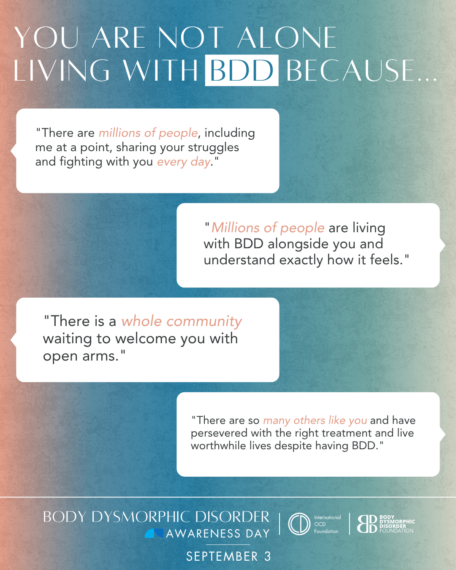
- Encourage connection. Consider whether your loved one might benefit from a BDD peer support group. Connecting with others who understand what they're going through can reduce feelings of isolation, provide hope, and remind them that they are not alone in their recovery.
Shareable BDD Awareness Graphics
Share the graphics on your social media using the hashtag #BDDAwarenessDay and tagging @IOCDF & @BDDFoundation! Click to open the graphics below and then right-click and Save Image As to download.
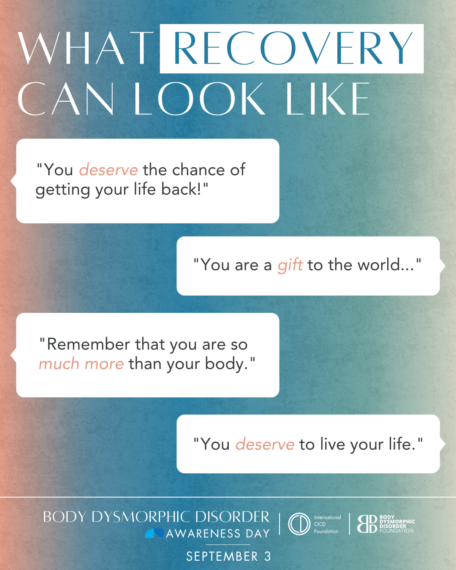
Make sure to follow us on social media and tag @IOCDF & @BDDFoundation when sharing graphics and facts about BDD.





BDD Awareness Day is a collaborative initiative of the International OCD Foundation and the BDD Foundation. Together we are working to raise awareness of body dysmorphic disorder, reduce stigma, and improve access to education and support.
Learn more or find help:
International OCD Foundation (IOCDF)
iocdf.org/bdd
The Body Dysmorphic Disorder Foundation
bddfoundation.org